Summary
The article focuses primarily on the external acquisitions committee that purchased Danish art for the collection of SMK – National Gallery of Denmark between 1866 and 1973. The committee was established to ensure that the director’s acquisitions did not become ‘one-sided’, but its existence eventually prompted a power struggle between the Royal Danish Academy of Fine Arts and the museum’s leadership. The article explores the committee’s composition over the decades, from being comprised mainly of wealthy patrons and benefactors to being dominated by artists appointed by The Danish Academy Council, and also considers its gender balance and artistic representation. The analysis belongs within the field of cultural policy, specifically as it pertains to visual art, and draws on theoretical frameworks of institutionalisation and the concepts of path dependence and autonomy. The empirical basis comprises Danish legislation and archival sources. The article concludes that the committee eventually became an institutionalised zone in which both political and art-political power relations came to govern the museum’s acquisition practices.
Articles
Introduction
This article concerns the Danish Committee for the Purchase of Works of Art for the Royal Collection of Paintings, which existed from 1866 to 1973, spanning more than a century. Generally referred to as the Gallery Commission or the Acquisitions Committee, the committee was responsible for purchasing contemporary Danish art for the collection at Statens Museum for Kunst (SMK), the National Gallery of Denmark. It had its own allocation of funds set aside specifically for this purpose. The reason given for the establishment of the committee in 1866 was that the ministry1 wished to curb the director’s power and avoid acquisitions becoming too ‘one-sided’.
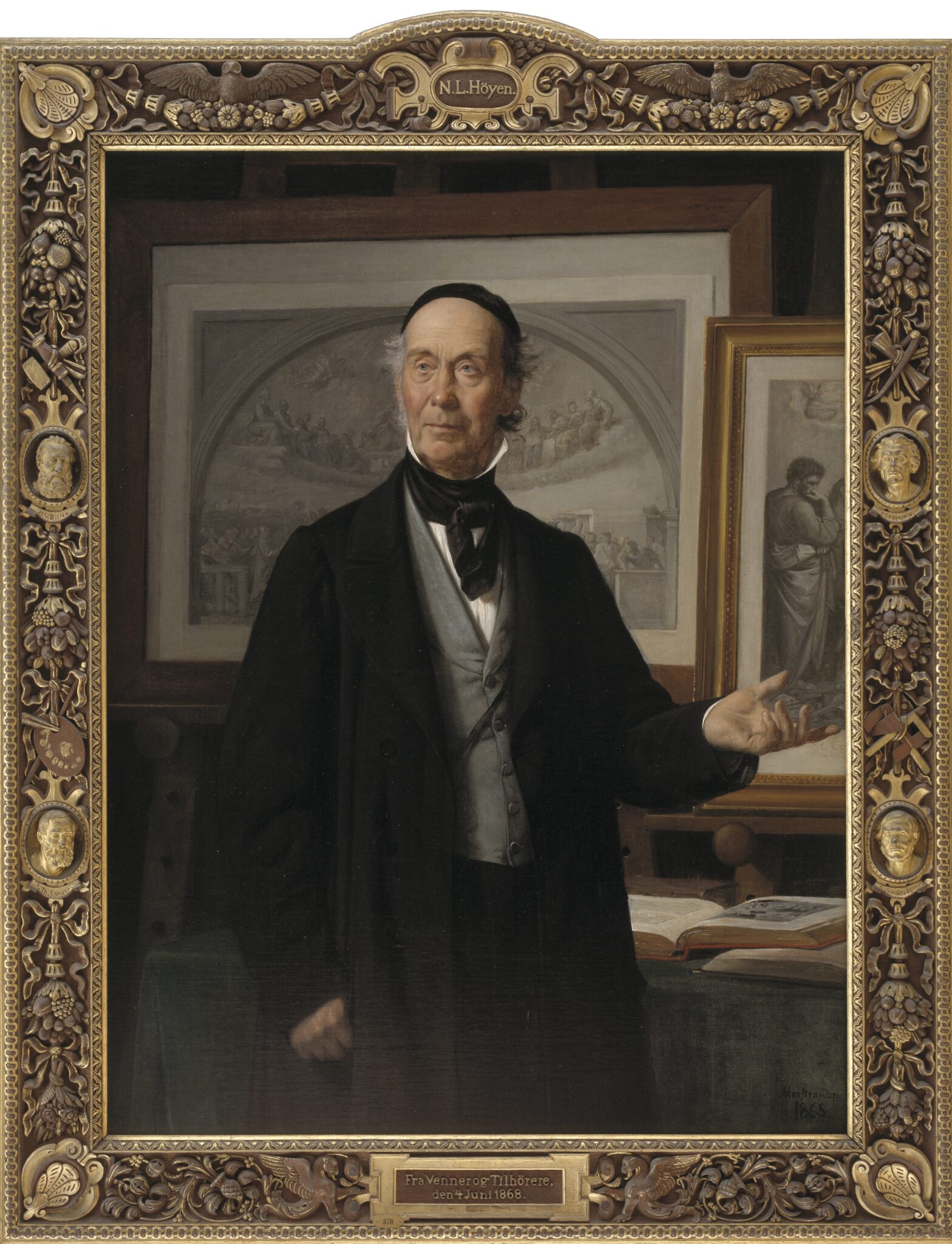
In his 1998 monograph on SMK, former SMK director Villads Villadsen clearly states his belief that the committee was created specifically as a response to the museum’s then director, Niels Lauritz Høyen [Fig. 1], and to his politicised view of art, which prompted him to use the museum as an instrument in a wider political struggle. In Villadsen’s view, Høyen thereby set in motion an arrangement that essentially suspended the museum’s ability to exercise its professional expertise for a prolonged period. It also introduced ‘a long and bitter conflict’ in the world of Danish art, and SMK thus acquired ‘for all time its distinctive status as one of the principal arenas for the clashes within contemporary Danish art’.2
Is his analysis true? It is certainly accurate that acquisitions often became a battleground – and a public one at that – but was this solely Høyen’s doing? Such a claim can hardly be a satisfactory explanation for why the political authorities maintained the arrangement for more than a century, and did not allow the museum to determine for itself how acquisitions should be made until 1983, ten years after the committee had been dissolved. Why did the ministry keep the museum constrained by a historically conditioned structure for so long? And how are we to explain the committee’s composition, which gradually changed from consisting of art-loving barons and wealthy patrons to become a body that, for long periods, was dominated by artists appointed by the Academy Council?
These are questions the article seeks to answer by analysing the museum’s acquisitions and the committee from the perspective of cultural policy. The analysis will contribute new knowledge about the formation of SMK’s Danish collection and thereby provide a deeper understanding of the museum’s collecting history. The article does not examine individual acquisitions or assess their quality; in this regard I refer instead to Villadsen’s evaluations. Rather, the present text offers an understanding of the structural frameworks – and power relations – within which acquisitions took place during the lifetime of the committee. In this way, it provides a broader context for each individual acquisition.
What do we know about the acquisitions committee?
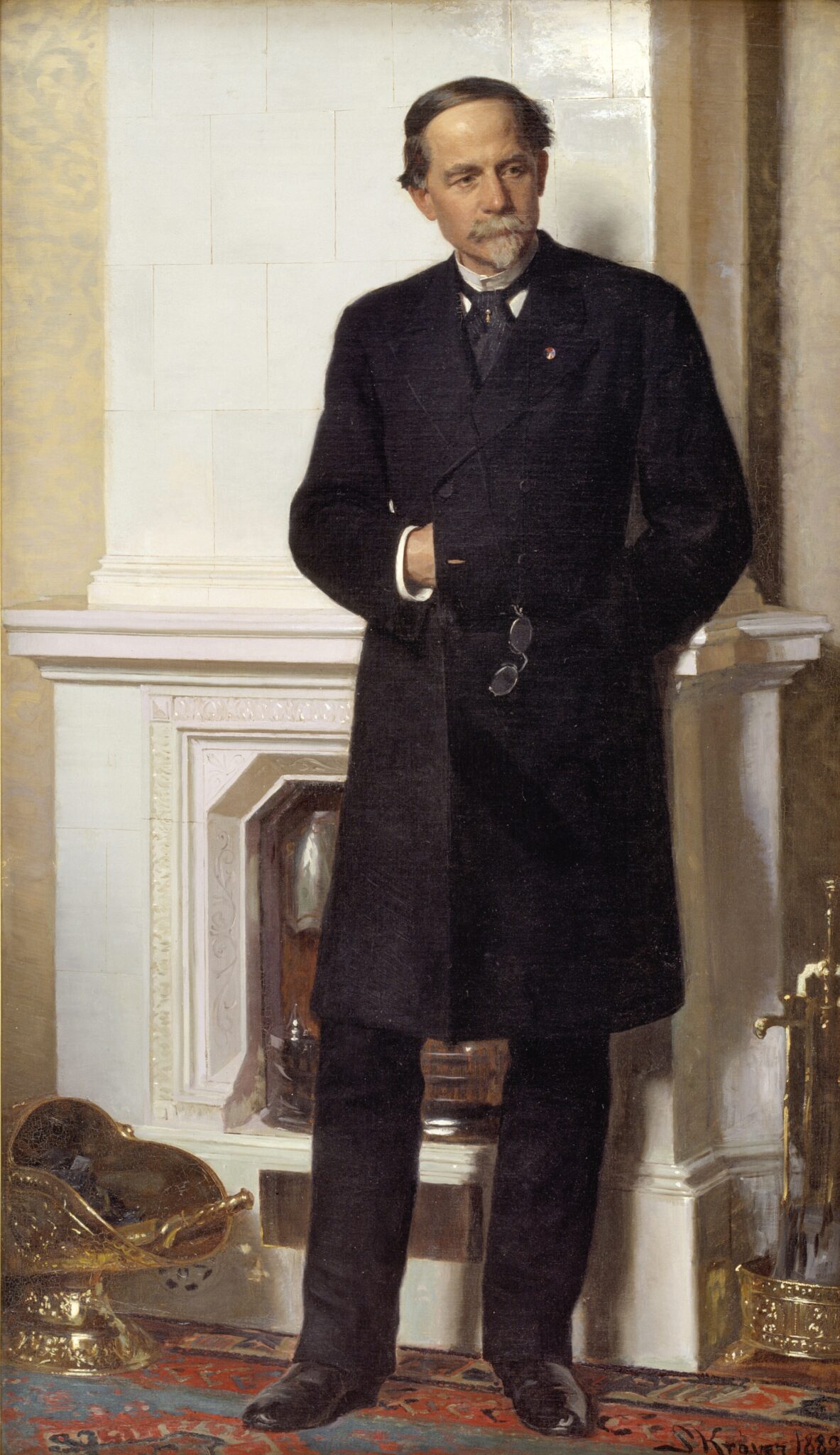
The acquisitions committee is not unknown in the existing art-historical literature, but no single comprehensive account has been provided so far, and the committee’s abolition has not been discussed at all. Villads Villadsen’s 1998 book on SMK contains the most extensive review, but it ends in 1952, meaning that the committee’s closure is not included. Another important source on the committee’s early history is the architect Ferdinand Meldahl’s [Fig. 2] two books on, respectively, the history of the Academy (written with Peter Johansen) from 1904 and the history of the juried Charlottenborg exhibitions from 1906.3 This is to say that former directors of these central institutions have laid the foundations for our present knowledge of the acquisitions committee. Their respective standpoints will inevitably have coloured their accounts to some extent.
The historian Jens Engberg also discusses the acquisitions committee in the three-volume work Magten og kulturen. Dansk Kulturpolitik 1750-1900 (Power and Culture: Danish Cultural Policy 1750–1900) from 2005.4 As the title suggests, Engberg’s approach concerns an analysis of power, and in this context he offers a relevant reading of the committee as part of the political power relations of the time. However, he only considers developments up to 1900.
In what follows, I draw on all three, albeit primarily on Villadsen. And although the existing literature mainly focuses on the early period of the committee’s life, there are still gaps that have not been investigated, including the crucial years in which the state assumed ownership of the museum. There is an interesting interlude here that has not previously been recognised, and which I will argue was significant for the later developments.
Acquisitions as cultural policy: theoretical framework
My perspective follows on from Engberg’s. Given that the establishment of the acquisitions committee was a political decision, it makes sense to view it as a manifestation of cultural policy in the visual arts – an expression of a (more or less) conscious policy that the Ministry of Culture imposed on the museum’s acquisition of Danish art. When a state seeks to govern, it does so through legislation and funding. That is very much what happened here. Over the years, a whole series of rescripts, resolutions and ordinances laid down rules for the committee and, in particular, for how it was to be composed. This was admittedly legislation of a lighter kind: while legally binding, these measures were not passed by parliament but issued by the ministry. The museum’s other collections – older foreign art, the collection of prints and drawings, and the plaster cast collection – were not subject to comparable control.
The Norwegian cultural policy scholar Geir Vestheim has developed a theoretical framework for analysing cultural policy that I will use here, even though this article deals more specifically with policy in the visual arts. In his view, cultural policy takes shape in an overlapping zone between culture and politics, and in negotiations between the actors operating within that zone: on the one hand we find artists’ organisations and leaders in the arts and cultural sector, and on the other politicians and civil servants.5 These stakeholders all have their own rationales, values and interests which they seek to advance. Thus, this is an arena of conflict. The outcome of their negotiations – cultural policy itself – is determined by the relative status and power of the parties involved. This is the overall understanding I apply to my study of the committee, and thus I see it as a zone that produces policy in the visual arts.
Vestheim observes that the stakeholders involved in such negotiations tend to become institutionalised – that is, they attain a position of entitlement in relation to cultural-policy decisions. He draws on historical institutionalism, a theory from social science that explains how institutions evolve over time. In this context, ‘institution’ should be understood both as the formal organisation (for example, the acquisitions committee) and as the informal rules and procedures (for example, where acquisitions take place) that structure behaviour. The theory places particular emphasis on an institution’s origins, since its observations suggest that institutions base their conduct on logics that can be traced back to the values, cultures and traditions that produced them.6 This early development is formative, and I use the concept of path dependence to explain why institutions are often locked into a particular trajectory of development, making change difficult. The past binds us, and alternatives fall away once a path has been chosen. Tradition can in itself legitimise continuation.7 Reflecting this, the concept of path dependence can be used to explain the high degree of stability that characterises the cultural sector.
According to Vestheim, the central value or interest for which stakeholders in the arts and cultural field will fight is autonomy. This draws on Pierre Bourdieu’s theory of fields and on his historical analysis of how art fought to win its independence and the right to be judged solely according to its own internal criteria in the modernist period.8 One might therefore expect to see a similar development at SMK, one where the museum gradually achieved greater independence in its relationship with the political system over the period in question. Yet that is not what happened. In the following analysis, I will therefore distinguish between different aspects of autonomy: first, the artistic autonomy just mentioned, which relates to the art field’s right to define and produce its own understanding of quality; and secondly, a more general conception of autonomy, tied to the way in which the state governs its institutions, where the degree of autonomy can be inferred from and observed in the legislation. The more general the legal text and its administration, the higher the degree of autonomy.9
Vestheim’s theoretical framework will be used to answer why the committee was established and why it displayed such extraordinary resilience, as well as to provide an analytical framework for the power relations at stake and for how they changed over time. The concept of autonomy will be used to understand which values and interests were contested, and how this affected the composition of the committee as well as the relationship of governance between the museum and the ministry.
Method, empirical material, and the structure of the article
As a consequence of this cultural-policy perspective, the legislation in force over the entire period surveyed will structure the study. The resolutions of 1866, 1887, 1901, 1929 and 1937, and finally the dissolution of the committee in 1973, will be subjected to analyses focusing on the power aspect.10 Who wielded the greatest influence: the ministry, the museum director, or the artists? And how was the outcome determined by the parties’ relative positions of power? In terms of method, I will examine how arguments were framed and use the concept of autonomy to understand the relationship between the ministry and the museum. In order to uncover why artists gained such extensive influence, I will investigate which competences they highlighted as decisive for acting as decision-makers in the state’s acquisitions. I will also examine the committee’s gender balance and artistic representation.
Since the purpose of this article is to contribute new knowledge about the nature of SMK’s collection of Danish art, the material has been examined for the ways in which the purpose of the collection have been defined and articulated historically, which criteria were applied, and what acquisition procedures were followed. The empirical material consists partly of the resolutions held in the Danish National Archives, and partly of relevant material on the acquisitions committee in the SMK archives.11 This material in turn pointed towards selected case files in the ministry’s archive, a review of the museum’s appropriations in the annual Finance Acts, and the one parliamentary debate concerning the arrangement. The last of these is source material that has not previously been examined.
The origins of the collection of Danish art
The collections of the National Gallery of Denmark – the Royal Collection of Paintings, the Royal Collection of Graphic Art, and the Royal Cast Collection – have three very different points of origin, each with its own distinct history.12 The collection of paintings was founded on the Danish monarchs’ acquisitions of older foreign art, with roots stretching far back in time and modelled on the princely galleries of Europe. The collection of Danish art, which forms part of the painting collection, has a much later starting point and – at least initially – served a different purpose.
The Danish collection was first established in 1812 through the purchases made by Prince Christian Frederik (later Christian VIII) from young Danish artists at the annual juried academy-run exhibition at Charlottenborg in Copenhagen. Christian Frederik was president of the Royal Academy of Fine Arts, and his purchases were less a matter of building the royal collection in any carefully planned way than of providing financial support to young artists.13
This is clear from the formalisation of the arrangement in 1840, when 3,000 rigsdaler a year was allocated for such purchases of Danish art, ‘particularly in order to encourage promising young artists.’14 These acquisitions laid the foundations of the collection of Danish art even though not all the works entered the royal art collection, some being hung instead at Christiansborg Palace and other public buildings. The practice also created an expectation among artists that purchases would be made for the museum at the annual exhibition.
After N. L. Høyen was appointed curator at Det kongelige Billedgallerie (Royal Picture Gallery) in 1839, alongside Christian Jürgensen Thomsen, he too began making acquisitions for the collection. For a number of years, therefore, acquisitions of Danish art had a twofold nature: there were royal purchases and the curator’s purchases, based on different principles. Høyen bought art according to a national programme that closely aligned purchases with the broader National Liberal political project that was on the rise in Denmark at the time.15 His acquisitions were governed by a museum logic, whereas the king purchased according to a patronal rationale, in keeping with his role as protector of the Academy and as a collector for his personal collection.
Jens Engberg has described this as a struggle between two manifestations of cultural policy: one absolutist, aristocratic and internationally oriented, the other bourgeois and national.16 The conflict also divided Denmark’s art scene into two camps: the so-called ‘Europeans’, who were associated with the Academy (and favoured by the king), and the so-called ‘nationals’, several of whom stood in opposition to the Academy (and from whom Høyen made most of his acquisitions).
We see, then, that embedded in the origins of the collection is an understanding that purchasing from living artists always involves an element of support, and that the collection arose out of an alliance with the Royal Danish Academy of Fine Arts. We may also note that acquisitions were causes of conflict and controversy almost from the outset.
30 May 1849: the state takes over
The museum was nationalised and so became state property in 1849, and one might well have expected that, with the king removed from the equation, calm would now descend on the matter of acquisitions. However, immediately before the transfer of ownership Denmark had seen a change of monarch, and this proved decisive for the power struggle between the museum and the Academy – a struggle that would become part of the acquisitions committee’s institutional DNA.
The new king, Frederik VII, was less interested in art than his predecessor and so transferred his right to carry out acquisitions to the Academy shortly before ownership of the royal collection passed to the state.17 According to Meldahl, Høyen protested against this move, but to no avail.18 For two years (1848 and 1849) it was the Academy, that is, the artists, who purchased works for the museum for the 3,000 rigsdaler allocated to the purpose. Then Høyen had his revenge.
In the new National Liberal government’s first Finance Bill, passed in the spring of 1850, the grant of 3,000 rigsdaler was transferred from the Academy to the Royal Collection of Paintings and earmarked for ‘the enlargement of the collection with works by Danish artists’. This did not happen without a struggle. During the parliamentary debates ahead of this decision, a counterproposal was put forward, urging the government to return both the grant and the decision-making power to the Academy, and to restore the earlier purpose of the purchases, insisting that they should be intended to encourage promising young artists or at least, in a somewhat broader sense, to serve ‘the encouragement of art’.19 The argument that artists should be in charge of the purchases was explained – with a scarcely concealed reference to Høyen – on the grounds that artists possessed ‘the greatest possible understanding of art, the greatest possible impartiality and the greatest possible freedom from all personal and accidental sympathies’.20
This argument did not persuade the Minister for Ecclesiastical and Educational Affairs, Johan Nicolai Madvig, who replied that the state had a responsibility to ‘seek out that understanding of art which is found not in the artist himself … but in men who have made the study of art their task’. The objective was precisely to ensure impartiality, since it was problematic to ‘impose upon the very men who themselves submit works to the exhibition the additional task of judging which works should be acquired.’21
Madvig was supported in this view by the parliamentary spokesman, who considered it absolutely necessary that the curator of SMK should in the main determine such matters, and that a certain one-sidedness of taste was not necessarily a negative thing, but might instead be an expression of profound insight and extensive knowledge.22
It is perhaps not surprising that the National Liberal politicians gave Høyen and his position their full backing. But, as is evident, other views were also in play. As a result, at the very moment when the Danish state took over the collection, it also took over the conflict concerning who should make acquisitions and what acquisitions ought to mean in terms of artistic policy. The parliamentary debate offers a very early example of a political desire to make art-historical expertise decisive – something that may be interpreted as an expression of a wish to grant the museum institutional autonomy.
1866: ‘a direction too one-sided for art’
The new arrangement did not last for long. In 1866, a political decision was taken to introduce an acquisitions committee to manage the scheme that had existed since 1840: an annual allocation of 3,000 rigsdaler for the purchase of Danish art for the museum. The immediate reason given in the legal document was that Jürgensen Thomsen, Høyen’s co-director, had died, and so the committee was introduced, as the minister wrote directly to Høyen, in order to prevent the director from ‘[…] pursuing a direction too one-sided for art as such.’23
Now, Høyen had more or less single-handedly determined acquisitions for sixteen years, so why introduce an acquisitions committee in 1866? Villadsen explains this move by arguing that Høyen’s acquisition policy had become the object of such vociferous criticism, not least from Kunstforeningen (the Copenhagen Art Society), that the ministry could no longer afford to ignore it. It therefore appointed a committee in order to deflect the attacks directed at Høyen.24
If one widens the lens still further, however, the full explanation is more likely to reside in the overall political situation in Denmark at the time. The National Liberals, who had supported Høyen – and whom he had in turn supported – and who, as shown above, had no problem with his one-sidedness, had lost political power. In 1866 a conservative landowning government came to office.
As Engberg notes, the committee was entirely in keeping with the new political climate. It consisted of two aristocratic landowners, Otto Rosenørn-Lehn and Sophus Danneskiold-Samsøe, alongside two members of the Copenhagen bourgeoisie who politically belonged to the National Liberal camp: the philanthropist Emil Hornemann and the patron of the arts J. C. Jacobsen.25 All were appointed by the Minister for Ecclesiastical and Educational Affairs, Theodor Rosenørn-Teilmann, himself a landowner and actively opposed to the National Liberals. Villadsen describes these men as knowledgeable amateurs and art aficionados whose involvement was intended to ensure a certain populism in the acquisitions.26
The minister wrote to the committee that ‘only such pictures should be acquired for the collection as worthily represent Danish art in its various periods, and it is art, not the individual artist, that is to receive support.’27 The artists concerned should be talented and accomplished, but acquisitions could only be made from living artists, not from the deceased.
The question of whether acquisitions were to serve as support for artists had evidently continued to smoulder. Indeed, the fact that the committee was permitted to buy only works by living artists and not by deceased one seems somewhat arbitrary. But the minister made it clear that the aim was ‘worthy’ acquisitions, and that the overall objective was to build a representative collection showing Danish art in its full breadth (as opposed, one must assume, to a ‘one-sided’ display).
The details concerning the purpose of acquisitions are crucial, because these lines from the minister in 1866 came to form the basis for how the scheme would be understood thereafter. It was here that the arrangement was defined, and these were the lines to which people returned when interpreting the guidelines for the acquisition of Danish art. The purpose of the scheme as such was not addressed in the subsequent resolutions, nor elsewhere.
1887: The Royal Danish Academy of Fine Arts strikes back
The composition of the acquisitions committee changed quite fundamentally twenty-one years later with a new resolution. The same conservative government was still in power, so the changes cannot be satisfactorily explained in terms of a political change of regime. In the text of the new resolution, the change was explained by a desire to align the committee with the reorganisation of the Academy and the establishment of the Academy Council, which came into force at the same time. The two were, quite literally, two sides of the same matter: Resolution no. 1.a concerned the Royal Danish Academy of Fine Arts, while 1.b concerned the committee.28 Under the revised arrangement, the committee was to have two permanent members: the museum’s director and the lecturer in art history at the Royal Danish Academy of Fine Arts. Besides them, there were to be three members serving six-year terms, nominated respectively by the Academy Council, by the director of SMK, and by the ministry.
The Academy Council was a new entity intended to settle the conflict that had surrounded the Academy for decades and that, as mentioned earlier, had divided the Danish art scene into two camps. The establishment of an Academy Council was a compromise designed to give influence to those artists who had broken with the conventions of the academic style and who, as a result, had either been excluded altogether from the Academy or kept from holding positions of influence within it.29 The governance of the Academy was now entrusted to a smaller council of thirty-two members – one in which those artists who had hitherto stood outside would be able to gain representation.30
As far as the acquisitions committee is concerned, this meant that the ministry now had at its disposal a council that – at least in theory – embraced the full breadth of the Danish artistic profession and was therefore understood to represent all artists. This was important because the Academy was not merely an educational institution, but also an institution of judgement. Formally, it was obliged to advise both the state and private individuals on artistic matters. With this change, the state could now use the Academy Council as an appointing body with greater legitimacy. The acquisitions committee became the Academy Council’s first appointive responsibility; later it was granted a whole series of rights of nomination to committees, boards and other bodies – a function it still performs today.
On paper, this looks like a radical transformation of the acquisitions committee, but this was true in appearance only. For if one looks more closely at the committee’s development after 1866, it was already moving in a direction where those whom Villadsen called ‘knowledgeable amateurs’ were gradually replaced by professional expertise. Even so, baron Otto Rosenørn-Lehn still sat on the committee and, after Høyen’s death in 1870, had become the museum’s director. To fill the vacant seat, the ministry chose to appoint the painter Wilhelm Marstrand, who at that time was director of the Academy. When he died in 1873, the architect Ferdinand Meldahl stepped in instead, at the same time taking over the post of director of the Academy from Marstrand. In 1878 the committee was further strengthened by the addition of Julius Lange, who was then a lecturer at the Academy, thus once again bringing an art historian into the body.
The concept of autonomy and a perspective focusing on the analysis of power relations can help explain this 180-degree turn towards once again giving artists influence over acquisitions. On the one hand, there is clearly a movement towards allowing the art field itself to define artistic quality. Høyen’s death undoubtedly left a professional vacuum, and artistic expertise was needed now that a non-specialist occupied the director’s chair. An analysis of power relations would suggest that the Royal Danish Academy of Fine Arts now re-entered the zone. Høyen had, in a sense, been the Academy’s adversary. Now he was gone. This left room for a powerful figure such as Meldahl, who, as Engberg points out, was used by the conservative landowners to implement their cultural policy.31 Meldahl’s position in relation to the museum had been further strengthened by his role as the hero of the hour when the collection of paintings was rescued from the burning Christiansborg Palace in 1884, and by the fact that in the years that followed he was the prime mover when the state decided to build (and fund) a new, independent museum building.32
If one looks at who the Academy Council chose for the first committees, Engberg’s assessment appears justified. These were not artists from the opposition, but members of the old guard of professors belonging to the more conservative wing. The first member was Carl Bloch, followed by Frederik Vermehren and then Otto Bache.
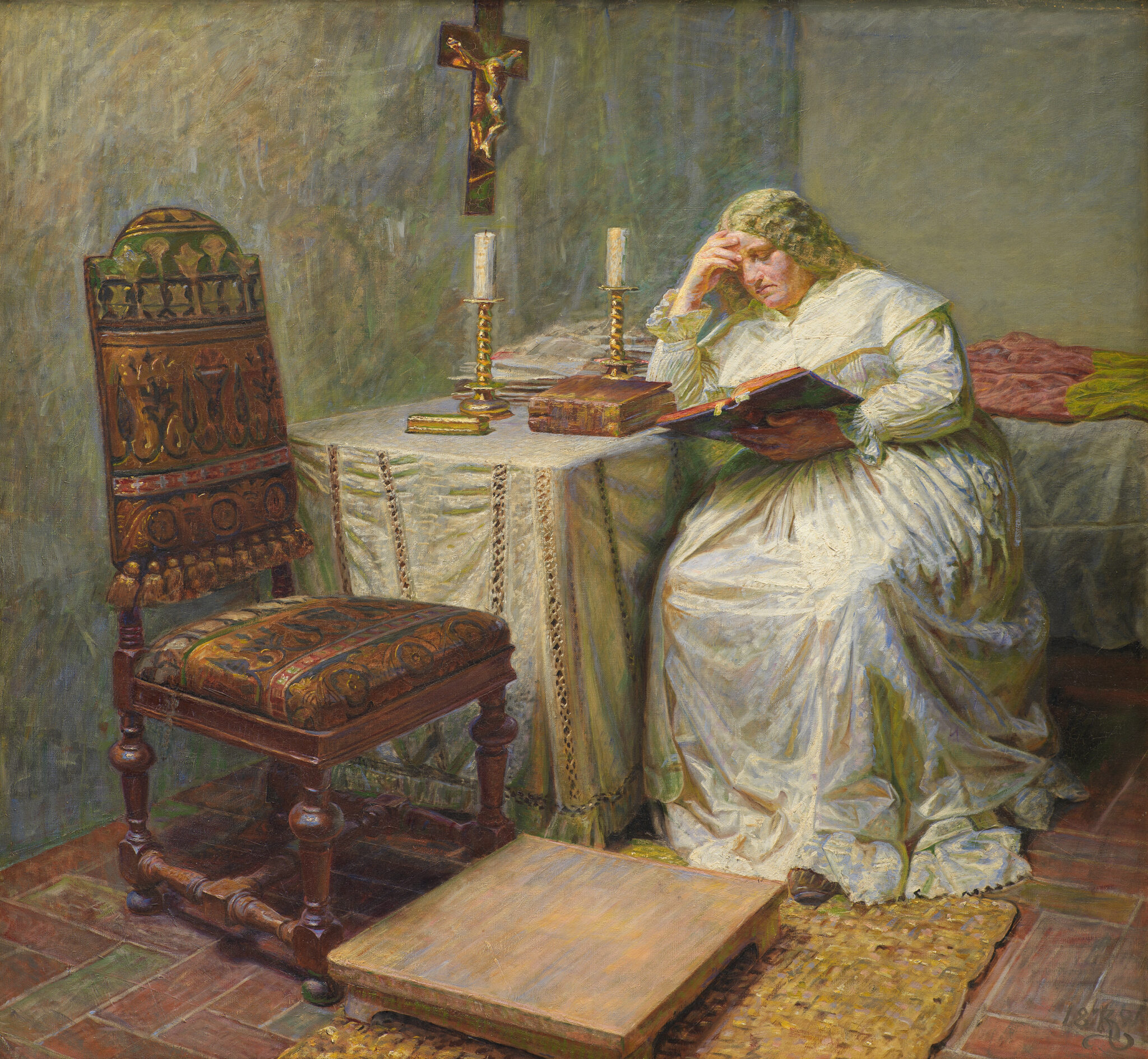
That the acquisitions made nonetheless came to reflect a degree of breadth is, in Villadsen’s view, due largely to Lange, who was now the committee’s permanent member. This made it possible, at an early stage, to secure representation for French-inspired Naturalism through the acquisition of Peder Severin Krøyer’s Two Gypsy Women Outside Their Cottage. Spain (1878).33 And although the committee had been born out of the alliance with the juried Charlottenborg exhibitions, this did not prevent it from also inspecting the first exhibition held at the newly established alternative exhibition set-up, Den Frie Udstilling, in 1891, where it purchased Kristian Zahrtmann’s Leonora Christina in Blåtårn (1891) [Fig. 3] and Peder Severin Krøyer’s A Street in Torello, Italy (1890). Nor did it hesitate to visit the gallery Kleis Kunsthandel in the 1890s, another alternative to Charlottenborg, which showed the new currents of Naturalism and Symbolism.
The committee still mattered politically, as is evident by fact that the museum chose the Minister for Ecclesiastical and Educational Affairs, Jacob Scavenius – part of the conservative wing in parliament – as its representative on the committee. As its final member, the ministry appointed the lawyer Peter Frederik Koch. This set a precedent whereby, with very few exceptions, the ministry would henceforth choose either a lawyer or one of its own officials as its representative.
What was decisively new in the 1887 resolution was that it established an arrangement under which the two principal actors, the museum and the Academy, were each allowed to choose a representative. This arrangement formalised the Academy’s position of power in relation to the museum’s acquisitions.
1901: More artists on the committee
The new arrangement can be seen, on the one hand, to constitute a delegation of power by the ministry, which no longer hand-picked all the members itself, and on the other as an acknowledgement that the committee was a site of negotiations between different parties, corresponding to Vestheim’s conceptualisation of how cultural policy in the arts is produced. It also meant that each individual member would come to see themselves as a representative of particular interests and values, structurally paving the way for internal power struggles within the committee.
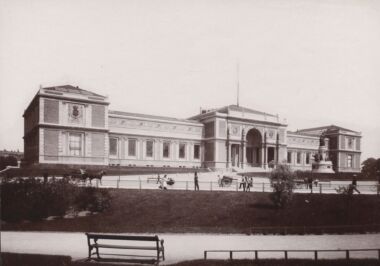
This is, at any rate, what happened in 1896, when Emil Bloch had just become director of SMK, meaning that, for the first time in twenty-five years, the museum once again had an art historian at the helm. It was also the year in which the museum opened in its new building in Sølvgade, thereby acquiring its own independent identity.
The Academy had expressed a wish to the ministry to have a sculptor on the committee. This request triggered a prolonged discussion within the committee regarding its composition and representation. In a note to Bloch marked ‘confidential’, Carl Goos, a former Minister for Ecclesiastical and Educational Affairs, wrote that the intention behind the 1887 resolution had been that the director’s standpoint and the Academy’s standpoint should be equally represented, with two members each.34 Lange, who was loath to be taken as representing the Academy, maintained that he had been appointed because he was not an artist and possessed a critical understanding of art.35 Bloch, too, believed that the committee was becoming divided into artists and non-artists, which was fundamentally a mistake, since the original intention of the committee had been precisely that it should consist of non-artists.36
Despite the director’s point of view, the Academy nevertheless gained another artist on the committee when Lange died in 1896 and Vilhelm Bissen entered in his place.37 The choice of a sculptor is not explicitly explained in contemporary sources, but one possible reason may be that in 1886–87 the committee was put in charge of all acquisitions for the Royal Collection of Paintings and Sculpture, receiving an earmarked grant of 15,000 kroner for the purpose.38
When the terms of the sitting members came to an end, Bloch took the opportunity to write to the ministry requesting an amendment to the resolution so that it would revert to its original form, under which the ministry chose all the committee’s members – in other words, removing the Academy Council’s right of nomination.39 The Academy pulled in the opposite direction and wanted the number of artists on the committee increased to three: two painters and one sculptor.
They justified this by pointing to the unique professional expertise held by artists, as Meldahl argued in his letter to the ministry:
At a time when the importance of professional training and expertise is asserted in all other walks of life, it is puzzling indeed that artists – as is in fact the case – are, so to speak, regarded as incompetent in so specifically artistic a matter as the enlargement of the State’s collection of Danish works of art.40
The ministry decided the matter, and it must have been receptive to Meldahl’s argument regarding the professional expertise of artists. Under the 1901 resolution, the Academy Council was given the right to appoint two members to the committee, while the lecturer’s permanent seat was abolished.41 The ministry presented the outcome as one that satisfied all legitimate concerns. Yet it is quite obvious that the Academy’s wishes had been given greatest weight. In the power struggle between the director and the Royal Danish Academy of Fine Arts, it was once again the latter that emerged as the stronger party, and whose expertise was accorded the greatest importance.
The committee’s acquisition procedures
Given all this, the committee had become something of a battleground, and SMK’s director clearly felt challenged by the artists on the committee. This makes it all the more relevant to look more closely at how the committee worked, how it made decisions on acquisitions, and whether these disagreements were reflected in its procedures.
Throughout the entire period, brief minutes were kept from every meeting. Meetings took place either at the museum or at various exhibitions. To a considerable extent, exhibitions structured the committee’s work. In its earliest years, the committee’s activities were concentrated primarily in the first months of the year, coinciding with the juried Charlottenborg Spring Exhibition. This changed as the Copenhagen exhibition scene became more diverse and exhibitions more numerous. As noted earlier, this development also freed the committee from its original attachment to the Charlottenborg exhibition venue. A review of the minute books makes clear that the committee developed its own understanding that it was obliged to view all relevant exhibitions. Although this obligation was never formalised in the resolutions, it became an informal institutional practice – a norm.
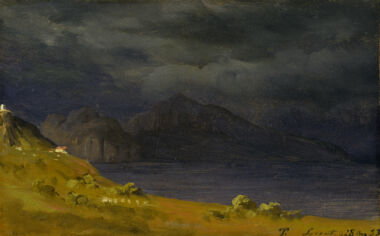
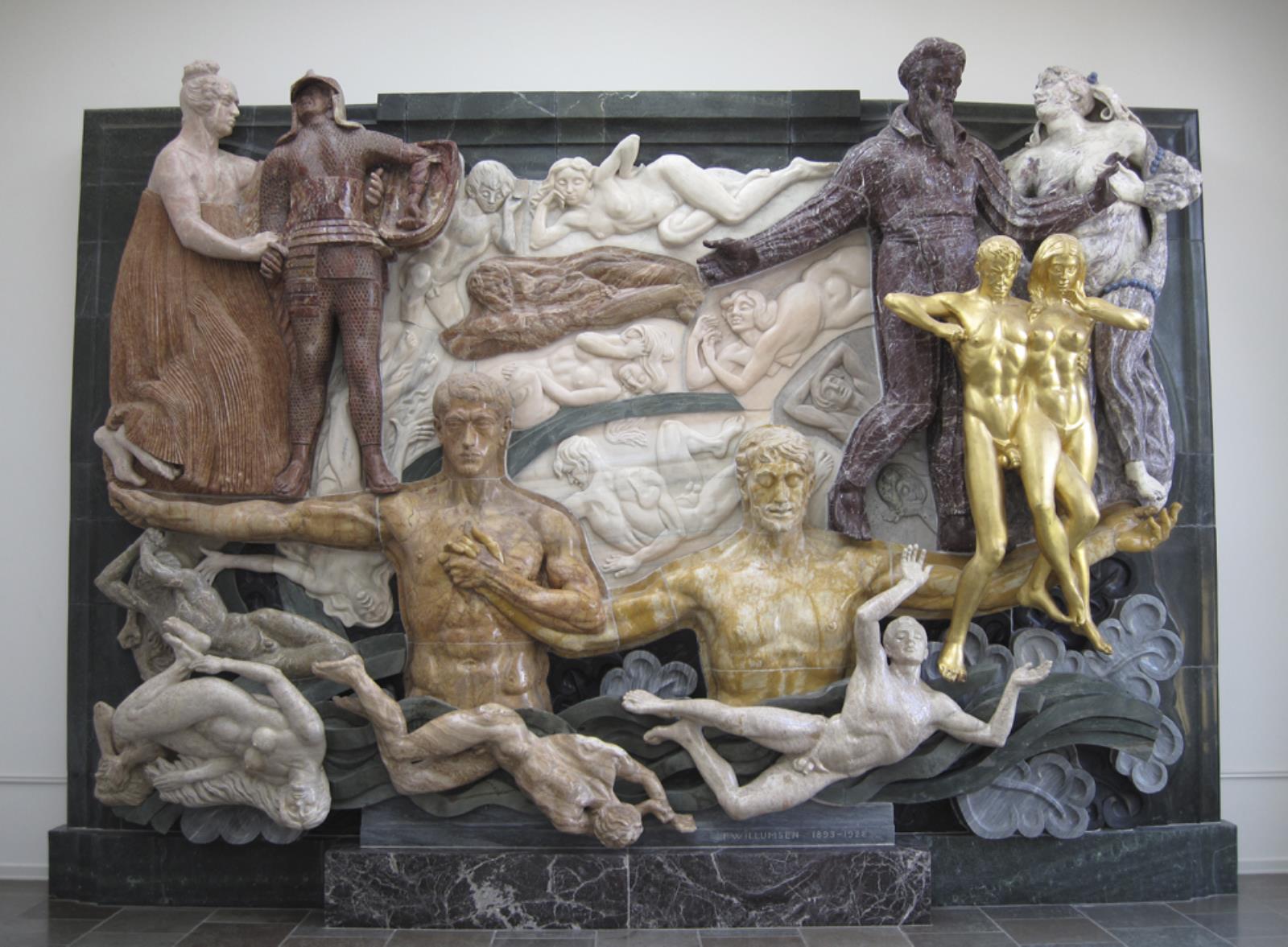
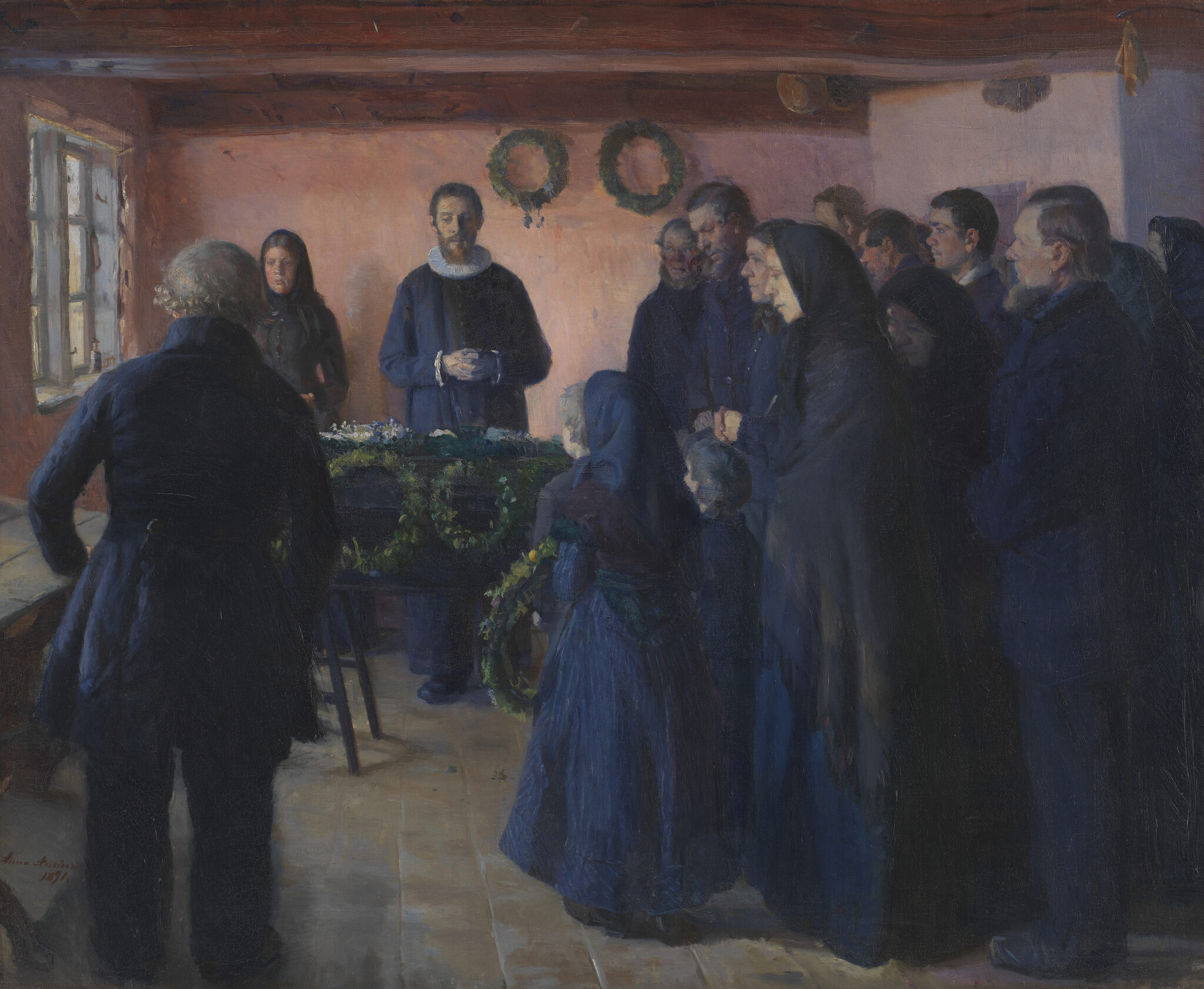
The committee could also acquire works directly from artists, either through studio visits or by means of commissions, though the latter were relatively rare [Fig. 4].42 Asking artists to submit works for the committee’s consideration was a common occurrence.43 Finally, the museum was offered a considerable number of gifts, and its practice in this regard varied over the years, as will be discussed later.
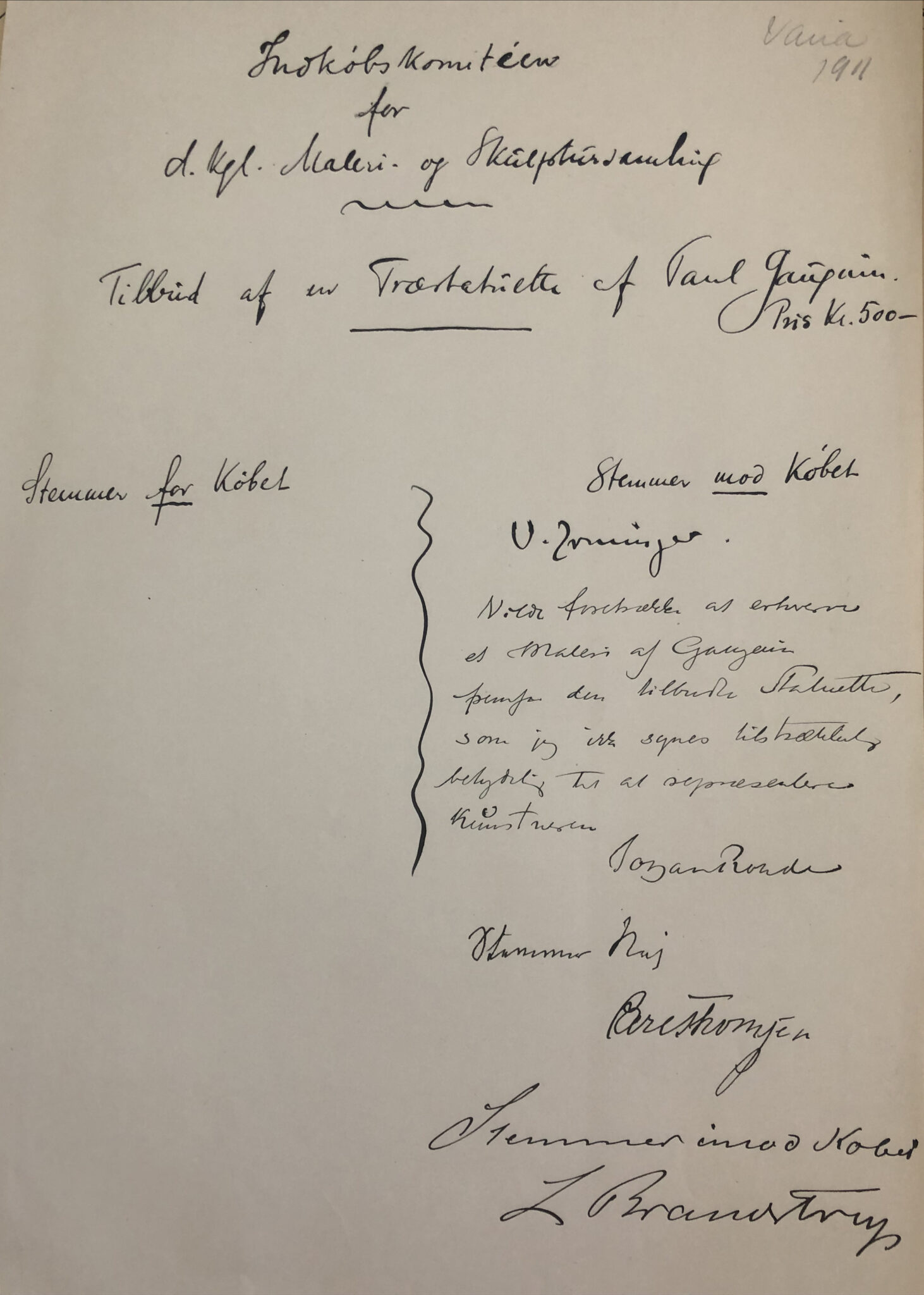
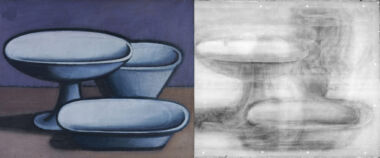
The brief minutes show that generally speaking, the director of SMK would put forward a proposal to purchase, which the other members would then either support or oppose. These proposals were rarely reasoned, and the explanations given are mostly concerned with why a particular work ought not to be acquired. Throughout the period, purchases and refusals were decided by vote [Fig. 5]. Here, the fact that the committee often found itself divided into factions becomes most apparent. During Leo Swane’s time in particular (1931–1952), the combative tone is unmistakable in the minutes, and Swane was entirely dependent on the ministry’s representative in order to get his way.44 He usually succeeded, but in one instance, in 1948, the artists used their numerical majority to force through an acquisition that the director opposed: Egill Jacobsen’s Blue Lines. Cagnes,1947 [Fig. 6].45
Clearly, such conditions made it difficult to pursue a strategic or long-term acquisitions policy. Nor is there any trace in the archive of a formally articulated policy for acquisitions. The closest approximation is a brief note from 1885 outlining which artists in the exhibition were not yet represented in the collection, which were represented by a single work, and which already had several works in the museum’s holdings. This may indicate an underlying principle of considering new acquisitions in light of the existing collection and prioritising artists not yet represented, reflecting a desire to build the collection broadly in accordance with its original intentions.46
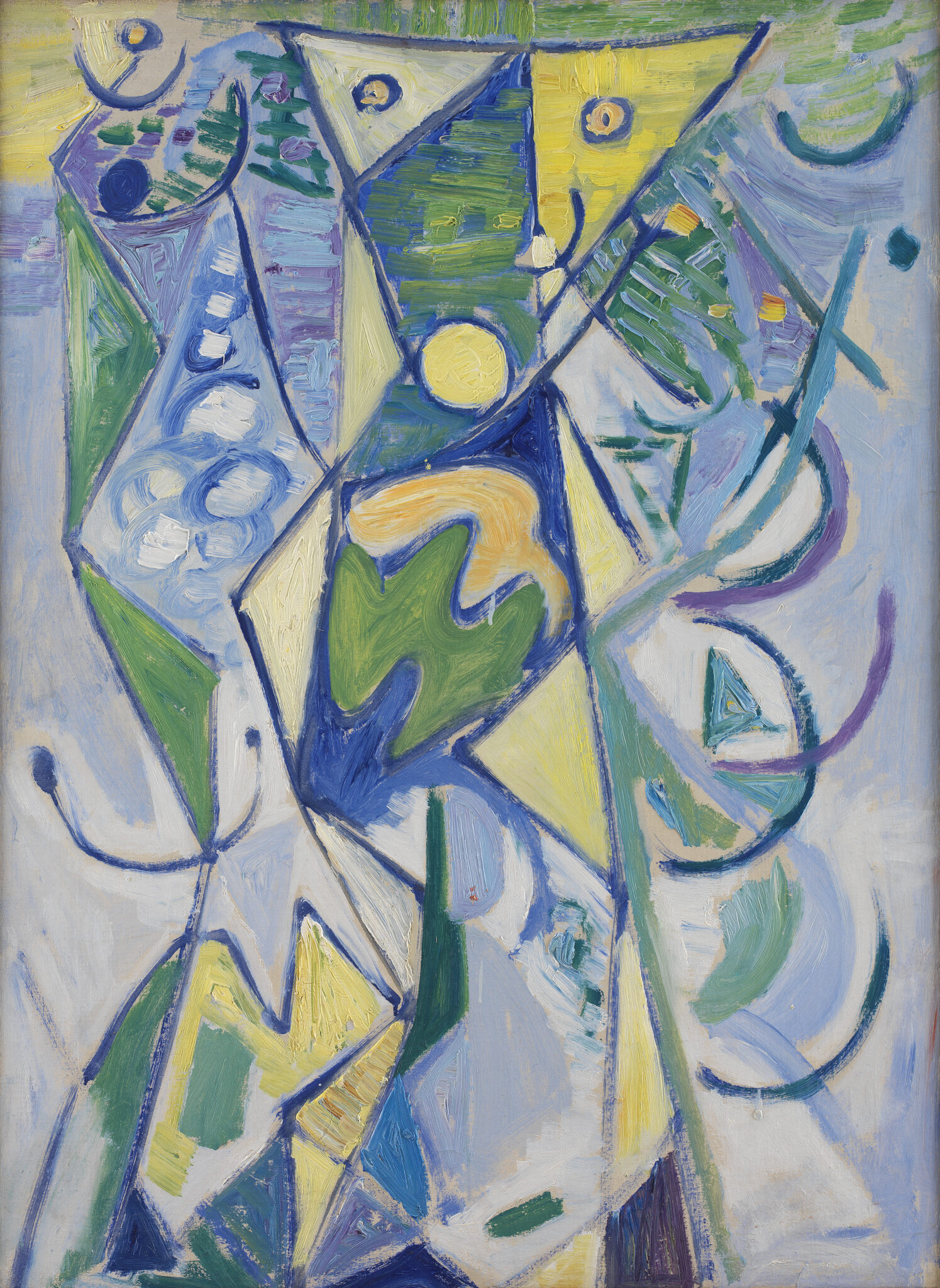
All this is to say that acquisitions were very much governed by what works were currently on offer. This was reinforced by the fact that decisions were made on the spot. In other words, a purchase at an exhibition was decided while the work was being viewed for the first time. Such a practice must undoubtedly have introduced a certain degree of arbitrariness.
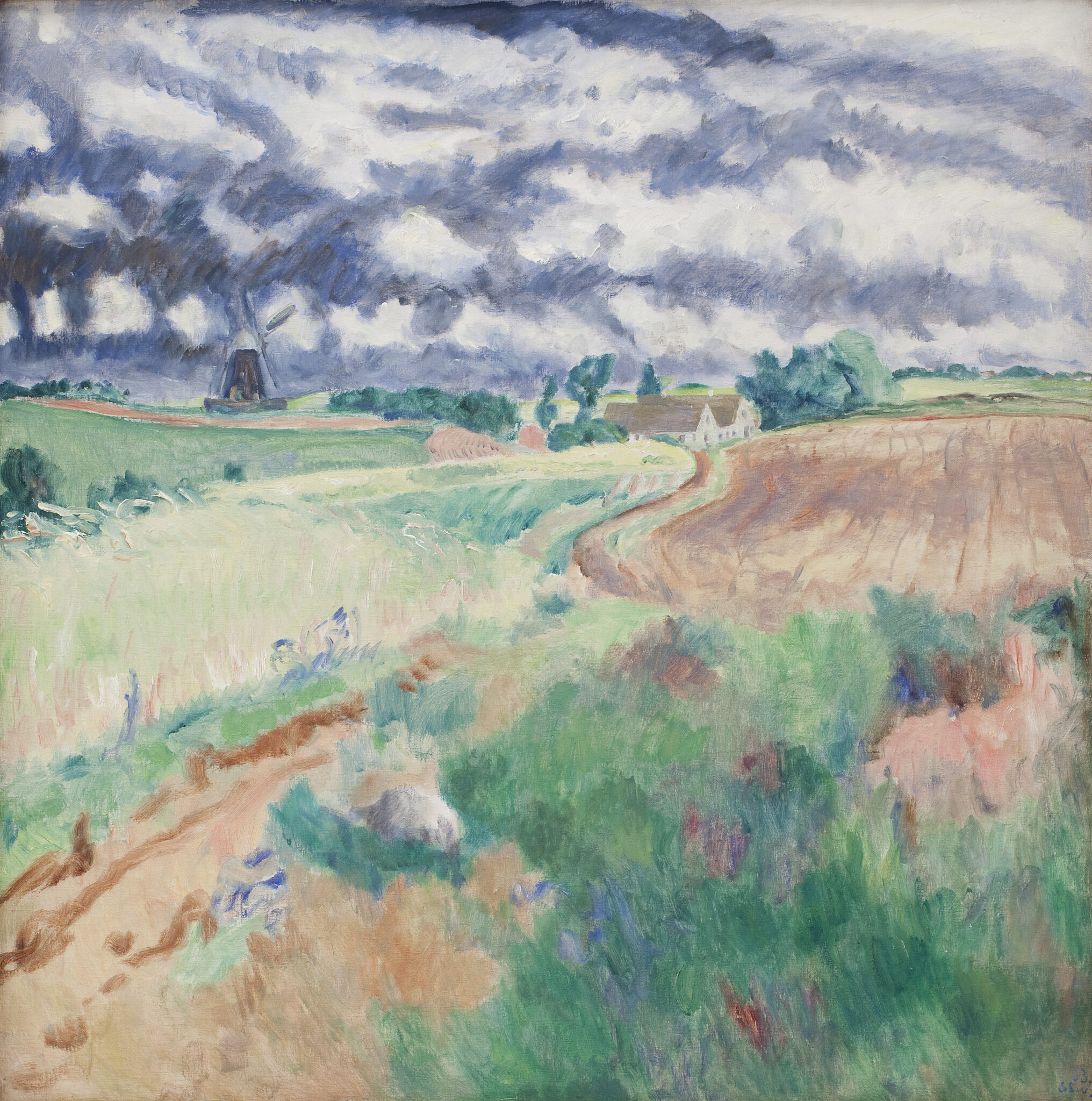
Nor does one find any written procedures in the archives for dealing with conflicts of interest on the part of artists or the director. A later resolution from 1929 makes clear that an internal rule stated that members of the committee could not sell works to the museum while serving on it. As regards the director, too, it would appear that the rules were tightened later on. At any rate, during his directorship Leo Swane did not take part in the handling of acquisitions of works by his brother, Sigurd Swane [Fig. 7].47
The committee and representation
In the early twentieth century, only minor shifts in the composition of the committee took place. Most strikingly, as long as Bloch remained director, he nominated his curator Karl Madsen as a member of the committee. This created a balance between art historians and artists. That balance was upset when Karl Madsen became director in 1914 and chose instead to nominate an artist.48 Quite exceptionally, the ministry did the same, meaning that until 1917 the committee consisted of four artists: Carl Thomsen, Ludvig Brandstrup, Valdemar Irminger and Johan Rohde, together with the director.
Johan Rohde was Karl Madsen’s choice. One may well speculate as to why. One possible explanation is that Madsen wanted the committee to reflect recent developments in Danish art. Modernism had had its breakthrough, and a number of exhibition venues and artists’ groups had set a new aesthetic agenda. Madsen may have wanted this modern point of view to be represented on the committee, which until then had been dominated by older, more conservative artists. With Rohde, a representative of Den Frie Udstilling entered the committee for the first time – the artists’ association that he had helped to found. Rohde had also been one of the initiators of Malende Kunstneres Sammenslutning (Society of Painting Artists) in 1909. By every measure, Rohde embodied the artistic-political opposition to the Academy. And since renewal apparently did not come through the Academy Council, the director himself had to secure the committee’s artistic profile. Madsen also chose to reappoint Rohde repeatedly until 1923, even though this meant that the artists were in the majority.
That did not prevent the early decades of the century from seeing growing public criticism of the Gallery Commission. There was dissatisfaction with Madsen’s line in acquisitions in 1907 and 1908 because he prioritised the ‘peasant painters’ over the Symbolist painters. More generally, critics pointed out that the acquisitions committee was failing to purchase the art of its own time – the modern – even though that had been the original intention of the arrangement. This criticism culminated in 1917, when a group of artists and art historians proposed that the committee be abolished.49
Criticism also came from other quarters. One of the declared aims of Kvindelige Kunstneres Samfund (KKS, The Danish Women Artists’ Association), founded in 1916, was to secure places for women artists on ‘committees, juries and the Academy Council’.50 Such efforts were highly pertinent: strikingly, the list of all the artists who sat on the committee up to 1973 does not include a single woman.
Women were also, to some extent, excluded from influence within the Academy Council, and the fact that female representation never reached the committee undoubtedly contributed to the committee’s limited acquisition of works by women artists [Fig. 8].
Nor were women alone in feeling unrepresented. This was a period in which artists organised themselves into professional associations precisely in order to exert political influence, and they did so in opposition to the Academy Council. Dansk Billedhuggersamfund (The Danish Sculptors’ Society), founded in 1905, was the earliest such organisation, and its aim was to work for the interests of the profession, including specifically ‘to promote questions concerning acquisitions for the National Gallery of Denmark, as well as other public purchases of sculpture’.51 Malende Kunstneres Sammenslutning (The Society of Painting Artists), founded in 1909 as mentioned above, was likewise an organisation chiefly concerned with exhibition conditions and with making Danish art known abroad, but also explicitly with addressing its members’ relationship to the Academy.52
Yet none of these three organisations ever succeeded in gaining a place on the acquisitions committee. The Academy Council managed to retain control of this bastion of artistic-political power, which accords with Vestheim’s observation that once a given entity has attained a position of entitlement within the cultural-political zone, change becomes difficult. As a result, only a limited segment of artists was represented on the acquisitions committee.
The acquisitions committee: an institution
The historical point of departure for the committee was the acquisition of Danish art, and, as specified in 1866, of art by living artists. This was a relatively limited task. Over time, however, the committee quietly appropriated ever wider powers. First, gifts also came under the committee’s remit.53 Gradually, acquisitions of foreign art and older Danish art likewise became part of its responsibilities. From the director’s point of view, this represented a significant restriction of the museum’s professional room for manoeuvre.
In 1929, director Gustav Falck took up the fight. Because these extensions of the committee’s remit had taken place informally, he was able to invoke the historical record, the earlier resolutions and the original intentions behind the acquisitions committee. He succeeded in having the committee’s powers restricted so that they applied only to the acquisition of Danish art, both contemporary and older54 – not to gifts, and not to foreign art. He also secured the introduction of a provision allowing the director of SMK, on his own authority, to make urgent purchases of older Danish art up to the value of 8,000 kroner.55
Of all the resolutions, this is the only one to convey the impression that the director held a strong hand and, as a result, succeeded in having all his desired changes implemented. I would argue that the concept of path dependence can explain why the museum’s director won this battle. His negotiating position was strengthened by the fact that the issue was one of returning the arrangement to its original basis, to what Falck himself called ‘the historical right’.56
In that respect, the resolutions are highly revealing, since they were structured in such a way that they first set out the background and history of the matter, then explained what one party (the museum director) had requested, and then what the other party (the Royal Danish Academy of Fine Arts) wanted. Finally, they account for the political decision and set out the resulting change. They make it clear that this was a forum of negotiation between competing interests, a zone for the production of artistic policy.
At the same time as the committee’s powers were curtailed, it was also reduced in size. This had been desired both by the director and by the artists. The membership was reduced from five to four. The museum’s own nominated seat was the one that disappeared. In compensation, however, the director’s vote would henceforth count double. This was done in order to simplify and streamline the committee’s procedures. A system of alternate members was also introduced, and the term of office was reduced from six to four years in consideration of the artists.57
The fight to regain lost ground
The Royal Academy of Fine Arts was far from satisfied with the new provisions. With great persistence, it campaigned to recover influence over the museum’s acquisitions of foreign art and the acceptance of gifts, as well as to secure more artists on the committee, on the grounds that artists, when it came to the art ‘being created now, have greater insight and are better able to judge which works ought to be incorporated into the State’s art collection than the scholar or museum man.’58 In 1934 it raised the stakes by obtaining the support of all artists’ associations in Denmark for its demands.
This led to yet another resolution in 1937, though despite lengthy negotiations between the parties it produced only a minor change. Faced with the Academy’s demands, Swane, then director of the museum, stated that he found the proposal ‘predominantly objectionable’ and that ‘in the composition of the committee, greater consideration ought rather to be given to museum-based art-historical expertise.’59 The ministry stipulated that, provided a rule was introduced requiring at least three of the committee’s four votes in order for any acquisition to be made, sufficient account had thereby been taken ‘of the interests here emphasised’.60
Villadsen writes of the period that, although the Academy generally had little difficulty in preserving its (conservative) stamp on acquisitions, the overall landscape surrounding the museum’s acquisitions was nevertheless changing. The New Carlsberg Foundation had begun purchasing younger Danish art – works that might subsequently find their way into the museum’s collection. Independent endowments had also emerged, making funds available for acquisitions outside the acquisitions committee, among them the Rønnenkamp Bequest in 1937. In this way, the museum director acquired more instruments with which to steer the direction of acquisitions independently.61
1973: The committee is abolished
The winds of change had begun to gather force. In a 1969 cultural policy report which reviewed the entire field covered by the Danish Ministry of Culture, the section on SMK asked, somewhat rhetorically, whether the Gallery Commission ought still to be maintained, since ‘it is surely desirable that responsibility for decisions within artistic fields should not be diffused’. Yet once again the risk of one-sidedness was raised should the director of SMK (at that time Jørn Rubow) be left to decide alone. The report floated the possibility of fixed-term appointments as a solution, or of altering the composition of the committee so that representatives of artistic life in the provinces might also be included.62 Those ideas never came to fruition.
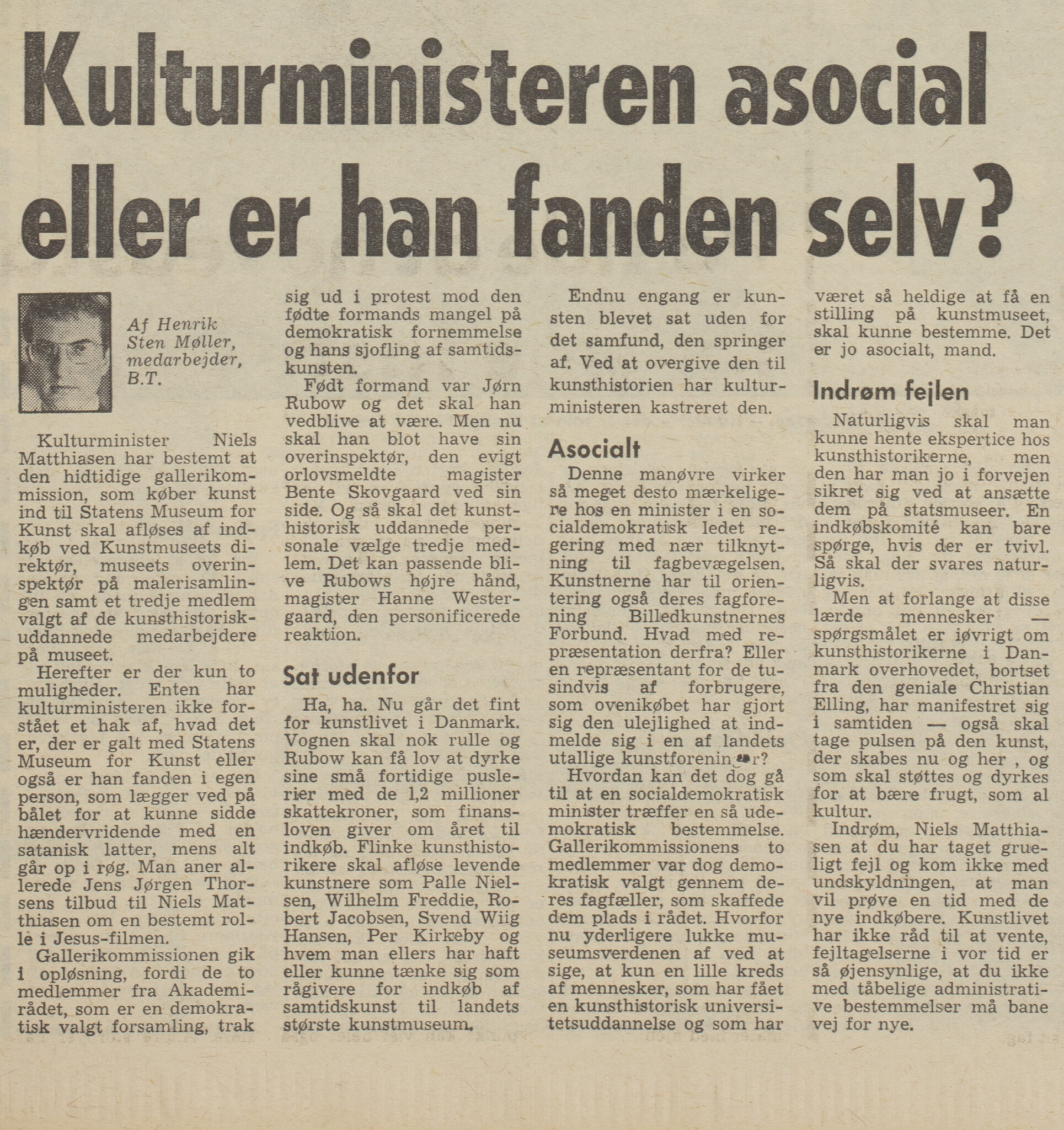
A few years later, the Academy Council chose to push against the prevailing wind. Having repeatedly tried to expand the scope of the artists’ powers, it now dug in its heels. It launched a press strategy [Fig. 9], while at the same time threatening the ministry that it would withdraw from the committee unless it was given influence over all acquisitions: Danish and foreign art, the acceptance of gifts, and influence over what was displayed. In December 1972, the two serving artist-members of the committee, Bent Sørensen and Gunnar Aagaard Andersen, wrote to the minister, arguing that otherwise no artistic coherence could be achieved in the collection – a collection that had suffered because ‘too much Danish art has escaped the museum’s attention, just as the museum, through its failure to acquire, has lost more than a generation of foreign art’. As advisers to the state, they could not countenance this, and so they asked to be relieved of their appointments.63
Their demand did not receive unqualified support in artistic circles. In an article in the left-wing newspaper Information, Erik Thommesen stated that he advised against giving the protesting members greater influence, since they represented a way of thinking primarily concerned with favouring the profession of artists – not art, nor society. It was a view to which the Ministry of Culture paid heed.
The ministry therefore took the two artist-members at their word. In a memorandum to the minister, the head of department Erik Thrane wrote:
To allow artists to sit on an acquisitions commission for the National Gallery of Denmark is, when one pauses to think on it, rather questionable. It could easily give rises to issues concerning directional art policy or organisational nepotism (not to mention personal nepotism). Purchases ought presumably to be made on the basis of an assessment of the works’ artistic value and their place within the museum’s art-historical totality. Such an assessment is presumably best made by art historians, that is, by the museum’s own staff.64
Despite the somewhat guarded tone, the result was unequivocal: the committee was abolished. The transfer of responsibility to the museum was, however, handled rather cautiously. First came an ordinance in 1973 laying down detailed rules for the composition of an internal committee consisting of the museum’s professional staff, with the director as chair, elected annually. It was also specified that this should be preceded by a discussion ‘in which the main guidelines and principles for the museum’s acquisition policy in the coming year are laid down’.65 The result of the election was then to be communicated to the ministry. Not until 1986 did the ministry remove all regulatory requirements governing the museum’s acquisition of Danish art.66 As the minister wrote, it was left to the museum itself to determine the procedure for acquisitions, ‘since the matters to which the royal ordinance relates now naturally belong among those matters that should be organised by the institution itself.’67
The museum and the ministry
I now want to widen the lens and, applying the concept of autonomy, consider what the history of the committee can tell us about the museum’s relationship with the ministry as regards governance. In doing so, I will approach an answer to the question of why the museum acquired institutional autonomy so late.
One may begin by noting that this was not a linear development. As early as 1850, the museum was briefly given the opportunity to make decisions on the basis of its own rules, norms, and values. Whether this amounted to genuine institutional autonomy is difficult to determine with certainty, since the director was so closely entwined with political power. It may suggest that, in this period, institutional autonomy depended on whether the institution enjoyed political trust. At the same time, the analysis shows that artistic expertise gradually gained ground, in the sense that politicians increasingly favoured the position that the director and the artists should hold the majority on the committee. The committee never, however, developed into a true arm’s-length body – that is, into a complete delegation of decision-making power to professional expertise. Throughout the committee’s existence, a lawyer or representative of the ministry remained on it.
As the analysis so far has shown, the negotiations also concerned how professional art expertise itself was to be understood, and who was best qualified to embody it. With varying degrees of force and determination, successive directors fought for their professional integrity, while the artists argued that it was their expertise with the practice of art that ought to be decisive. Such artistic expertise seems to have gained particular momentum in this discussion with the advent of modernism in the early twentieth century, when artistic freedom and autonomy became more firmly established. That may help explain why artists came to dominate the composition of the committee in this period.
In that sense, two different sets of interests and values collided within the committee: artistic autonomy and institutional autonomy. Whereas the art field’s right to define artistic quality for itself became an accepted norm at the beginning of the twentieth century, institutional autonomy is generally a later phenomenon. According to Nanna Kann-Rasmussen and Casper Hvenegaard Rasmussen, who have analysed the development of autonomy in Danish cultural institutions, not until the 1950s and 1960s, with the emergence of sectoral administration, did professional standards came to be understood as a tool of governance, prompting the Danish state to increasingly leave independent decision-making to institutional staff.68 They also argue that the degree of autonomy may be read from the level of legislation: the more general the legal framework, the greater the degree of autonomy.
This ties in well with the overall development in governance described here: from more than a century of detailed regulation of the museum’s acquisitions of Danish art, in which the ministry even sat at the table when decisions were made, to the gradual transfer of responsibility to the museum from 1973 onwards. As is clear from both the 1969 cultural policy report and the memorandum to the minister in 1973, the understanding that decisions on artistic and art history matters ought to be taken by the museum alone had by then become the prevailing norm, and the acquisitions committee now appeared as an anomaly.
This nonetheless leaves a series of questions. Why was the acquisitions committee allowed to outlast, by some margin, the point at which the norm had changed? Why did the ministry only regulate the acquisition of Danish art, and not the other collections – older foreign art, the collection of graphic art or the cast collection? And why, from the directors’ point of view, was it primarily the Royal Academy of Fine Arts that challenged his institutional autonomy? These are the questions I will attempt to answer in conclusion.
The museum and the Royal Danish Academy of Fine Arts
As I have shown in the earlier sections, the SMK collection of Danish art was originally founded in the late absolutist period, partly out of a desire to support artists. It emerged in a state of symbiosis with the Royal Danish Academy of Fine Arts. This coincided with the historically crucial moment at which absolutism was dismantled and parliamentary democracy introduced. It was both a political struggle and a struggle over artistic policy, and acquisitions of Danish art assumed symbolic significance for both sides. It was, therefore, a collection born in conflict. Høyen chose to take an active part in that conflict and to use acquisitions to support and define a national project with strong political overtones – first with the king as his opponent, and later with the Academy as adversary. That, I would argue, is the reason why only this part of the collection came to be politically regulated. It carried political implications. Høyen’s way of politicising acquisitions undoubtedly gave rise to the arrangement. But Høyen cannot be blamed for the fact that the acquisitions committee endured for so long.
The analysis of power has shown that the Royal Danish Academy of Fine Arts occupied a particularly strong position. It had close ties to the king, to the aristocracy, and to the conservative landowners who came to power in 1866. Up until the change of regime in 1901, the Academy stood very close to political power. That is why it was able to exert such great influence on the way the committee was constituted.
What further consolidated the Academy’s position was the fact that it was, quite literally, the state’s adviser on artistic matters, while artists had traditionally been regarded – by virtue of their knowledge and insight – as those best qualified to assess and critically evaluate artistic quality. That had been their role and function until art history became established as a discipline alongside the growing field of art criticism. Yet this role was already being challenged with Høyen’s arrival, as shown in the parliamentary debate of 1850 where artists were dismissed as too partial to be entrusted with purchasing for the state collections. The history of the acquisitions committee thus also reflects a professional struggle between two groups: art historians and artists.
That impression is reinforced when one looks at the power structures and acquisition arrangements at the national museums in Sweden and Norway. In both countries, the academies of fine arts played a central role in the museums’ formative years, and both also had special acquisitions committees, on which artists were represented, to assist museum leadership with acquisitions in the late nineteenth and early twentieth centuries. But in neither case were these committees explicitly justified as a means of curbing the director’s power. Artists were involved because it was thought desirable to strengthen the expertise surrounding the museum and its acquisitions. Nor did matters develop, as they did in Denmark, into a prolonged conflict. And the acquisitions committee attached to the Nationalmuseum in Stockholm was abolished as early as 1913. The arrangement lasted longer at the Nasjonalgalleriet in Oslo, but because it functioned more as an advisory body, the museum directors were in practice able to decide on acquisitions for themselves.69
The fact that the Royal Danish Academy of Fine Arts and the artists were nevertheless allowed to dominate the committee for so long in Denmark is, in my view, best explained through the concept of path dependence. With the 1887 arrangement, a zone was established for negotiation between the principal stakeholders – the Academy and the museum – in which the Academy Council was granted rights of nomination. That position of entitlement then became institutionalised, reinforced by the growing value attached to the artists’ expertise. This is why the Academy Council retained its dominance within the committee long after the Academy itself had lost its position of power in Danish art. And it is why the committee became a challenge to institutional autonomy. How strong that institution had become may be seen from the fact that the political authorities only summoned up the courage to abolish it when the artists themselves took the initiative to leave. It was an institution that, in terms of cultural policy, ensured that acquisitions became associated with artists and with contemporary art: that is, the values implicitly embedded in its institutional foundations.
For SMK’s collection of modern Danish art, all this meant that up until 1973 acquisitions were based – for better and for worse – on a principle of immediacy and topicality. The obligation to regularly attend and buy from exhibitions had become a weighty historical tradition, one that it was in the artists’ interest to preserve. This gave the collection considerable breadth, but also a certain arbitrariness, and it made it difficult for the museum to pursue any coherent acquisitions strategy. The fact that acquisitions for this collection were subject to special rules that the museum itself could not control also meant that the Danish collection became isolated from the museum’s other collecting areas – which were not governed by statutory requirements – both in practice and in the understanding of what acquisitions were intended to achieve. Although the collection of graphic art and the cast collection also functioned as separate units for a long time, with their own leadership and acquisition budgets, and thus operated with a fair degree of autonomy, they always retained the authority to decide their own acquisitions.
With the 1973 ordinance, the ministry required a more overarching policy or strategy for acquisitions for the Danish collection, though this requirement was removed again in 1986. Only with the Danish Museum Act of 1984 was a common framework established for all acquisitions made by SMK. And although the Act contains a number of obligations, its wording is so general that it leaves it entirely to the museum itself to determine how acquisitions are to be made and according to what strategy. However, the Danish collection still has its own specific stipulation, even in the current legislation, which states that, as far as Danish art is concerned, representative collections are to be established and maintained – as has been required since 1866.70
Notes
About the author